Your Hero Is on the Way...

CALL (210) 460-0424 FOR A FREE CONSULTATION - WE FIGHT FOR THE COMPENSATION YOU DESERVE!

A Family Owned Firm With Over 15 Years of Service - We're the "Personal Side of Personal Injury!"℠
GET SCUTT LAW NOW!

Informe de tráfico de Texas: lunes, 5 de octubre de 2026
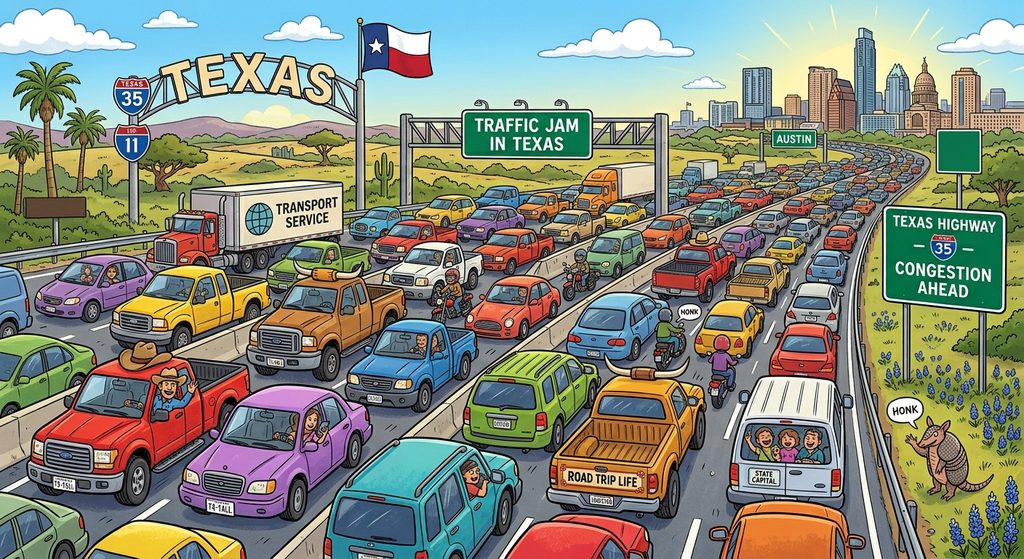
Accidentes, cierres y congestión en las principales áreas metropolitanas de Texas, además de qué hacer si resulta herido en una colisión

Los desplazamientos de los lunes se encuentran entre los momentos de mayor riesgo de accidentes de la semana. A continuación, se detallan los puntos donde los conductores de Texas están teniendo problemas hoy, así como las medidas a tomar si se ve involucrado en un choque.

San Antonio
Un choque múltiple provocó el cierre de una parte del Loop 410 (en dirección este) el lunes por la mañana. La policía de San Antonio informó que estuvieron involucrados cinco vehículos; TxDOT indicó que los carriles exteriores en dirección norte, a la altura de East Houston Street, estaban cerrados, mientras que los carriles interiores permanecían abiertos. Al momento de redactar esta información, no se disponía de detalles sobre posibles heridos.

También es importante saber: TxDOT ha iniciado un proyecto de construcción de 156 millones de dólares en la zona norte (North Side), a lo largo del Loop 410 y la avenida San Pedro; los conductores han expresado su frustración por los continuos cierres de carriles y desvíos. Las zonas de obras reducen el ancho de los acotamientos y modifican la disposición de los carriles semana tras semana, por lo que una ruta que recorrió con confianza el lunes pasado podría verse diferente hoy.

Evite: El Loop 410 (dirección este) cerca de Houston Street hasta que la vía quede totalmente despejada.

Houston
Incidentes de hoy:

Panorama reciente: El 22 de septiembre, un sistema regional de seguimiento de accidentes registró 135 incidentes durante la noche y la madrugada en el área de Houston; 74 de ellos fueron graves, aunque no hubo víctimas mortales. Las mayores concentraciones de incidentes se produjeron en la US-290 a la altura de la calle 34 (en Rosenberg) y en la SH 6 (en Sugar Land). Esto sirve como recordatorio de que los incidentes pueden acumularse rápidamente, incluso en días en los que no ocurre ningún accidente de gran repercusión mediática.

Preste atención a: I-10, I-45, US-59/I-69, el Loop 610 y el corredor de Beltway 8.

Dallas–Fort Worth
Incidentes de hoy:

Punto conflictivo recurrente: El intercambio de las autopistas I-635 e I-35E, en Farmers Branch, ha registrado varios accidentes graves en las últimas semanas. TxDOT lo clasifica como parte de un corredor de mejoras en curso; los accidentes en este punto generan congestión rápidamente debido a las rampas de conexión entre autopistas, la incorporación de tráfico y la gran cantidad de carriles. Atención a: I-35E, I-635, I-30, Loop 820 e I-35W cerca de Fort Worth.

Austin
Incidentes de hoy:

Atención a: I-35 a su paso por el centro de Austin, MoPac (Loop 1), US-183 y SH 71.

El Paso
Incidentes de hoy:

Atención a: I-10, Loop 375 (Transmountain) y US-54.

Corpus Christi
Incidentes de hoy:

Atención a: I-37, US 181/SH 35 y los accesos al nuevo puente Harbor Bridge, SH 358 (South Padre Island Drive) y SH 286. El proyecto en curso del Harbor Bridge ha provocado cierres recurrentes de carriles y calles en el centro de la ciudad; por ello, consulte la página de cierres del proyecto antes de dirigirse a esa zona.

Rio Grande Valley (McAllen, Brownsville y alrededores)
Incidentes de hoy:

Atención a:

I-2/US 83 (Expressway 83) a su paso por McAllen, Pharr, Mission y Weslaco. El análisis de un bufete de abogados local describe esta vía como un corredor con intenso tráfico comercial y de camiones transfronterizos, frecuentes colisiones a alta velocidad e incorporaciones peligrosas. El cruce de la calle 10 (10th Street) en McAllen se señala como especialmente complejo.
US 77/83 hacia Brownsville. Ambas rutas convergen al entrar en Brownsville, donde la US 83 termina en el puente Veterans International Bridge; por tanto, espere encontrar tráfico de camiones y vehículos que se dirigen a la frontera.
US 281, SH 336 y Business 83 en el área de McAllen.
¿Sufrió lesiones en un accidente en Texas? Esto es lo que debe hacer:
Llame al 911 y busque atención médica, incluso si se siente bien. Algunas lesiones se manifiestan horas o días después.
Documente la escena tomando fotografías de los vehículos, las condiciones de la carretera, la señalización y las lesiones. Obtenga los nombres y la información del seguro de todas las personas involucradas, así como los datos de contacto de los testigos. No proporcione una declaración grabada a la compañía de seguros del otro conductor antes de hablar con un abogado.
Tenga en cuenta los plazos. En Texas, el plazo de prescripción para la mayoría de las reclamaciones por lesiones personales es de dos años a partir de la fecha de la lesión.
Conozca la norma sobre la responsabilidad. Texas aplica el principio de negligencia comparativa modificada; por lo tanto, usted solo puede obtener una indemnización si su grado de responsabilidad es del 50 % o menos, y el monto de dicha indemnización se reducirá en proporción a su grado de culpa.
Si usted o un ser querido ha sufrido lesiones hoy, Scutt Law PLLC ofrece consultas gratuitas: (210) 460-0424.

Esta publicación ofrece información general, no asesoramiento jurídico. Los detalles sobre el tráfico provienen de fuentes públicas, eran exactos en el momento de la publicación y podrían haber cambiado. La lectura de esta publicación no establece una relación abogado-cliente.
Texas Traffic Report: Monday, October 5, 2026


Crashes, closures, and backups across Texas’s major metros, plus what to do if you’re hurt in a collision

Monday commutes are some of the most crash-prone drives of the week. Here’s where Texas drivers are running into trouble today, followed by what to do if you’re involved in a wreck.

San Antonio

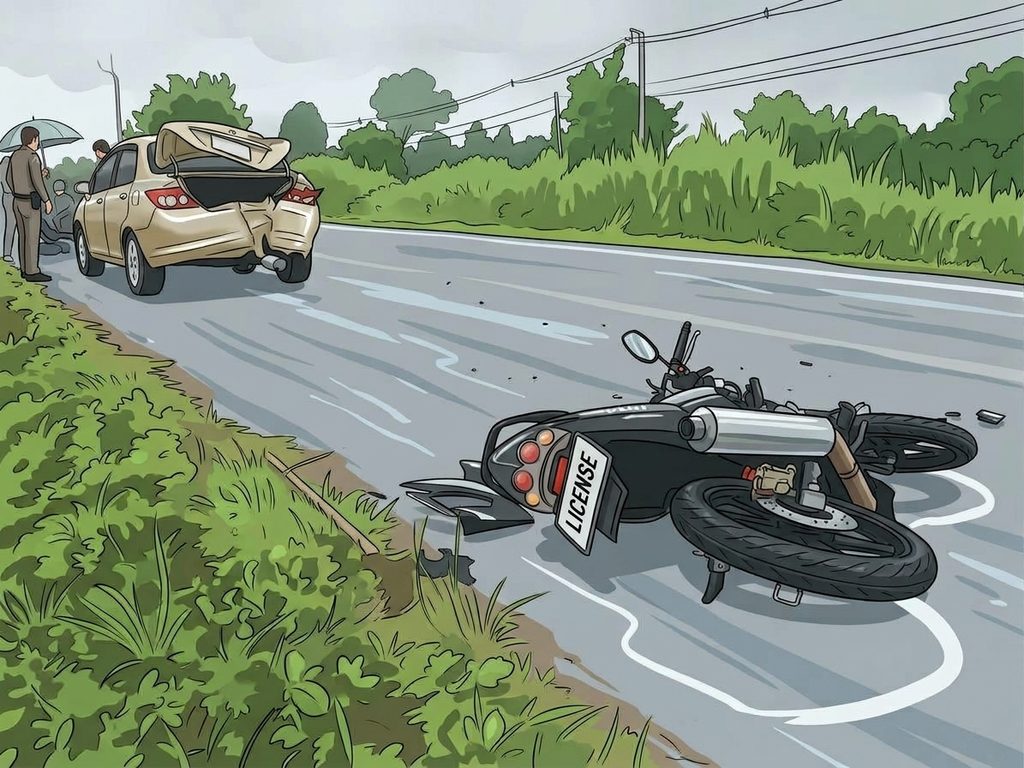
A multi-vehicle crash closed part of east Loop 410 Monday morning. San Antonio police said five vehicles were involved, and TxDOT showed the outside northbound lanes at East Houston Street closed while the inner lanes stayed open. Injury details weren’t available at the time of reporting.

Also worth knowing: TxDOT has begun a $156 million construction project on the North Side along Loop 410 at San Pedro Avenue, and drivers have voiced frustration over ongoing lane closures and detours. Work zones narrow shoulders and shift lanes from week to week, so a route you drove confidently last Monday may look different today.

Avoid: East Loop 410 near Houston Street until it fully clears.

Houston

Today’s incidents:

Recent snapshot: On Sept. 22, a regional crash tracker reported 135 overnight and early-morning incidents across the Houston area, 74 of them major, with no fatalities. US-290 at 34th Street, Rosenberg, and SH 6 in Sugar Land had the heaviest concentrations. That’s a reminder that incidents pile up fast, even on a day without a headline crash.

Watch: I-10, I-45, US-59/I-69, the 610 Loop, and the Beltway 8 corridor.

Dallas–Fort Worth

Today’s incidents:

Recurring trouble spot: The I-635/I-35E interchange in Farmers Branch has had repeated major crashes in recent weeks. TxDOT classifies it as part of an active improvement corridor, and crashes there create congestion quickly because of freeway-to-freeway ramps, merging traffic, and multiple lanes.

Watch: I-35E, I-635, I-30, Loop 820, and I-35W near Fort Worth.

Austin

Today’s incidents:

Watch: I-35 through central Austin, MoPac (Loop 1), US-183, and SH 71.

El Paso

Today’s incidents:

Watch: I-10, Loop 375 (Transmountain), and US-54.


Corpus Christi

Today’s incidents:

Watch: I-37, US 181/SH 35 and the new Harbor Bridge approaches, SH 358 (South Padre Island Drive), and SH 286. The ongoing Harbor Bridge project has produced recurring lane and street closures in the downtown area, so check the project’s closure page before heading that way.

Rio Grande Valley (McAllen, Brownsville, and the Surrounding Area)

Today’s incidents:

Watch:

  • I-2/US 83 (Expressway 83) through McAllen, Pharr, Mission, and Weslaco. One local law firm’s analysis describes it as a corridor with heavy commercial and cross-border truck traffic, frequent high-speed collisions, and dangerous merges. The 10th Street junction in McAllen is flagged as especially complex.
  • US 77/83 into Brownsville. The two routes run together into Brownsville, where US 83 ends at the Veterans International Bridge, so expect truck and border-bound traffic.
  • US 281, SH 336, and Business 83 in the McAllen area.

Hurt in a Texas Crash? Here’s What to Do

  1. Call 911 and get medical attention, even if you feel fine. Some injuries show up hours or days later.
  2. Document the scene by photographing vehicles, road conditions, signage, and injuries. Get names and insurance information from everyone involved, plus witness contact details.
  3. Don’t give a recorded statement to the other driver’s insurer before talking with an attorney.
  4. Mind the clock. In Texas, the statute of limitations for most personal injury claims is two years from the date of injury.
  5. Know the fault rule. Texas uses modified comparative negligence, so you can recover damages only if you are 50% or less at fault, and your recovery is reduced by your share of fault.

If you or a loved one was injured today, Scutt Law PLLC offers free consultations: (210) 460-0424

This post provides general information, not legal advice. Traffic details come from public sources, were accurate at the time of publication, and may have changed. Reading this post does not create an attorney-client relationship.


What to Do After a Motorcycle Accident: A Rider’s Guide

Injured in a motorcycle crash? Learn the steps to protect your health and your claim, why riders get unfairly blamed, and how a trial attorney can help.

A motorcycle crash can change your life in seconds. One moment you’re riding, and the next you’re dealing with pain, medical bills, missed work, and an insurance company that’s already calling.

What you do in the hours and days after a crash can make a real difference to your recovery and to your legal claim. Here is what every rider should know.

Take These Steps After a Motorcycle Crash

1. Get medical attention right away. Your health comes first. Some injuries, including brain injuries and internal bleeding, do not show symptoms immediately, so get checked even if you feel okay. Prompt treatment also creates an important record of your injuries.

2. Call the police. Make sure an official report is filed. It becomes a key piece of evidence later.

3. Document everything you can. If you are able, take photos and video of the vehicles, your motorcycle, skid marks, road conditions, and your injuries. Get contact information for the other driver and any witnesses.

4. Preserve your gear. Keep your damaged motorcycle, helmet, riding gear, and clothing. Do not repair or throw anything away until your attorney has had a chance to review it.

5. Be careful what you say. Do not admit fault or guess about what happened, even to be polite. Casual comments can be used against you later.

6. Do not give a recorded statement to an insurance adjuster. Adjusters may sound friendly, but their job is to limit what the company pays. Speak with an attorney first.

7. Talk to a motorcycle accident lawyer as soon as possible. Evidence fades, and every state sets a deadline for filing an injury lawsuit. Waiting can permanently bar your claim.

Why Riders Get Blamed, Even When They Weren’t at Fault

Motorcyclists often face bias that other drivers do not. Even when another driver caused the crash, insurance companies and defense lawyers may argue that you were speeding, that you were riding recklessly, or that you “assumed the risk” by riding at all.

These arguments are designed to shrink your claim or deny it entirely. They are also often unsupported by the evidence.

Many crashes come down to the same few causes:

  • Drivers who fail to see a motorcyclist, especially at intersections and when changing lanes
  • Left-turn collisions, when a driver turns in front of an oncoming rider
  • Distracted, speeding, or impaired driving
  • Unsafe lane changes and tailgating
  • Dangerous road conditions, such as potholes, gravel, and debris
  • Defective motorcycle parts, including brakes and tires

Finding the true cause of your crash is the first step toward holding the right party responsible.

What Compensation May Be Available?

Because motorcycles offer little protection, crashes often cause serious injuries and long recoveries. Depending on the facts of your case, you may be entitled to compensation for:

  • Past and future medical expenses
  • Lost wages and lost earning capacity
  • Pain and suffering
  • Physical impairment or disfigurement
  • Emotional distress and loss of enjoyment of life
  • Motorcycle repair or replacement costs
  • Wrongful death damages, if you have lost a loved one

Every case is different, and an honest evaluation of your claim starts with the details.

How a Trial Attorney Can Help

Insurance companies know which law firms settle quickly and which ones are willing to go to court. At Scutt Law PLLC, our attorneys are trial lawyers. We prepare every case as if it may go before a jury, and that preparation strengthens your position at the negotiating table.

Here is what that looks like in practice:

  • An independent investigation. We do not rely on the insurance company’s version of events. We obtain reports and witness statements, preserve evidence, and work with accident reconstruction experts.
  • A response to rider bias. We build evidence-based cases that counter blame-the-rider tactics and keep the focus on the negligent conduct that caused your injuries.
  • Insurance companies handled for you. We deal with the adjusters, paperwork, and deadlines while you focus on healing.
  • A fight for the full value of your claim. Early settlement offers rarely reflect the true cost of a serious injury. We weigh your long-term medical needs and lost income, and we do not recommend offers that fall short.

Common Questions

What if I wasn’t wearing a helmet?
Not wearing a helmet does not automatically prevent you from recovering compensation. It may be raised as a defense, but it does not excuse the other driver’s negligence.

What if I was partly at fault?
You may still be able to recover compensation. In many states, an injured person can recover damages even if partly at fault, although the amount may be reduced. Insurers often exaggerate a rider’s share of blame.

What if the other driver had no insurance?
You may have other options, such as your own uninsured or underinsured motorist coverage. An attorney can review every available source of recovery.

Talk to a Motorcycle Accident Trial Attorney

You have enough to worry about. If you or someone you love was hurt in a motorcycle crash, Scutt Law PLLC can take on the legal fight while you focus on getting better.

We handle motorcycle accident cases on a contingency fee basis, which means you pay no attorney’s fees unless we recover compensation for you. Your consultation is free and confidential.

Call (210) 460-0424 or submit your case for a free consultation online


This article is for general information only and is not legal advice. Reading it does not create an attorney-client relationship. Every case is unique, and past results do not guarantee a similar outcome.


Corpus Christi, San Antonio, Austin, Dallas, and Forth Worth – Texas Road Report for Saturday, October 3: Flooding Leftovers, Bridge Strikes, and Weekend Construction Closures

A slow-moving front dumped rain across much of Texas this week, and the effects are still on the roads. Add the usual weekend construction closures and a couple of high-profile crashes, and Saturday is a day to check your route before you leave. Here’s what I found for each of the six metros. Most of the reporting is from Thursday and Friday, so conditions may have shifted by the time you read this.

Corpus Christi

The Coastal Bend is mostly a weather story today. A National Weather Service outlook said showers and thunderstorms would push into the Coastal Bend Saturday morning before moving inland through the day. Another forecast shows scattered thunderstorms Saturday and thunderstorms on Sunday. Expect ponding on low-lying streets and slower commutes. chronfoxweather

On the construction side, the city’s most recent closure list I could find (September 4) said a section of Holly Road between Toben Drive and Rodd Field Road is closed through Friday, October 16. The city also keeps a running list of closures at cctexas.com/streetinfo, which is worth a look before you head out. corpuschristitx

San Antonio

San Antonio had the most incident activity of the six. On Friday morning, a major multi-vehicle crash involving an 18-wheeler closed the eastbound lanes of I-10 East at North Graytown Road in Schertz. Later in the day, a major crash blocked two eastbound lanes near Espada Road on the South Side and pushed drivers onto the access road. news4sanantonionews4sanantonio

Flooding is the other concern. A front stalled along I-35, and a flood watch was in effect until 7 p.m. Friday. On Thursday night, water covered the I-35 low-water crossing at Salado Creek on the Northeast Side, and crews put up barricades. Bexar County posts flooded-road closures at bexarflood.org. tprnews4sanantonio

Construction adds to it this weekend. TxDOT is closing the westbound Loop 1604 main lanes between Pat Booker Road and Lookout Road from 8 p.m. Friday, Oct. 2, through early Monday. Detours use the collector-distributor lanes and frontage road. The Lookout Road exit from westbound 1604 will close permanently after the traffic shift, and the closure may be postponed because of weather. news4sanantonionews4sanantonio

Austin

Austin’s trouble spot is I-35. On Friday, a semi-truck struck a bridge above the interstate, and Austin police said southbound I-35 would stay closed several more hours to clear significant debris. The same report notes it was the second time in a week that a semi hit a bridge over the interstate. mysanantoniomysanantonio

Flooding has also been a problem on that corridor. The city’s emergency operations center noted that portions of the I-35 corridor were flooding on Thursday, and KXAN ran a piece asking whether I-35 flooding at Riverside is becoming routine. For the weekend, KXAN’s forecast calls for occasional showers and downpours on Saturday with longer dry breaks between rounds, and a 20% rain chance through Sunday. Atxfloods.com tracks low-water crossing closures. West of town, flooding has closed roads in Marble Falls. austintexaskxan

Houston

Houston’s weekend is mostly planned closures. According to TxDOT, SH-249 Tomball Parkway is closed in both directions near Louetta Road for bridge repairs from 9 p.m. Friday until 5 a.m. Monday. Southbound traffic exits at Chasewood Park/Cypresswood and northbound traffic exits at Louetta, with the frontage road open both ways. abc13

Two other closures are in effect:

  • I-610 West Loop: nightly closures from 9 p.m. to 5 a.m. through Monday, with alternating lanes between San Felipe Street and West 18th Street. The northbound entrance ramps at Westheimer and San Felipe close during those hours. abc13
  • Gulf Freeway (I-45) in Galveston County: the southbound exit at SH-6/SH-146 closes nightly from 9 p.m. to 5 a.m. through the weekend. abc13

Local coverage was also flagging continued heavy downpours on Saturday, so watch for street flooding on top of the construction. abc13

Dallas

Dallas saw its first big rain in a long time. D Magazine noted the region had gone more than two months without rain before this week’s soaking. As of Friday morning, the forecast called for another round of rain Friday night into Saturday morning that could raise the risk of localized flooding, with rain chances dropping from Saturday into Sunday. The Trinity River near downtown was also under a flood warning. dmagazinedmagazine

The mess Thursday showed how fast things went wrong: collisions closed all or most lanes on I-35E in Red Oak, I-30 in Rockwall, and parts of I-635 and I-20 near Mesquite, and high water hit several highways. By Friday morning, airport disruptions at DFW and Love Field had eased to a handful of delays and cancellations. Water pooling on roads is harder to see after dark, and Texas law requires headlights when visibility is low enough that your wipers are running. The Dallas Morning Newsdmagazine

Fort Worth

Fort Worth took a hit on Thursday. City crews shut down 12 roads for flooding, firefighters rescued a woman from a flooded car, and all 12 roads were reopened by 2 p.m. At the worst point, I-30 at Chapel Creek Boulevard closed due to high water. CBS Newsyahoo

Earlier this fall, the big story was U.S. 287. After a September 24 crash, a garbage truck hit the Erath Street overpass, and crews demolished the damaged structure before reopening the highway. It’s worth knowing about if you remember the detours. fox4news

Before you head out

  • Never drive around barricades. Doing so is illegal, and Dallas-area reporting says the fine can reach $2,000.
  • Check live maps before leaving. DriveTexas.org, Waze, and local flood sites (bexarflood.org, atxfloods.com) update faster than any article.
  • Allow extra time on I-35. From San Antonio through Austin to Dallas, construction plus a bad day for trucks and bridges is a recipe for delays.

Disclaimer: This article is provided for general informational and safety awareness purposes only and does not constitute legal advice. Traffic laws, road closures, and emergency orders vary by city, county, and situation, and may change quickly. For questions about your legal rights or responsibilities, such as liability, insurance claims, or traffic violations, consult a licensed attorney. Weather conditions are changing, so always follow guidance from the National Weather Service, local emergency management officials, and law enforcement.

Texas Drivers, Take It Slow: Flood Risk Across the State Today

Friday, October 2, 2026

If you’re driving in Texas today, the weather is the story. A slow-moving system has been soaking much of the state, and the risk of flash flooding on roads is real. Here’s what’s going on and how to stay safe.

What’s happening

A Flood Watch covers much of South Central Texas, and the National Weather Service warns that a cold front combined with tropical moisture could bring life-threatening flash flooding. Moisture from the remnants of Hurricane Polo is feeding the heavy rainfall potential. Rain totals are significant: most of South Central Texas could see 1 to 4 inches through Friday, with 4 to 6 inches in the Hill Country and Winter Garden regions, and isolated pockets reaching 6 to 8 inches. Austin/San Antonio, TX +2

The threat isn’t limited to one region:

  • San Antonio and South Central Texas: Street flooding is the main concern in urban areas, and low water crossings are the biggest worry, with the Friday morning commute especially affected. ksat
  • Austin and the I-35 corridor: The flood watch continues through Friday evening and now extends east to Fayette and Lee counties, with periods of heavy rain possible at any time on Friday. kxan
  • Dallas-Fort Worth and North Texas: The flood watch has been expanded and extended through Friday afternoon, and isolated additional rainfall of 2 to 4 inches could cause flooding. weather
  • Central Texas (Bosque County): A flash flood warning was issued this morning, with warnings of life-threatening flooding of creeks, highways, streets and underpasses, plus possible debris flows near the Hydra fire burn scar. cedarnews

There’s some relief ahead. Rain is expected to linger through Sunday before ending, with sunny, dry weather next week. weather

Why flooded roads are so dangerous

Most people underestimate moving water. Roughly six inches can knock an adult off their feet, about a foot can carry away a small car, and two feet can float a truck or SUV. You also can’t tell how deep water is, or whether the road beneath it is still there, by looking at it. That’s why the National Weather Service puts it so bluntly: most flood deaths occur in vehicles. mysanantonio

Safety checklist for today’s drive

Before you go

  • Check whether your route crosses low-water crossings, creeks or underpasses, and plan an alternative. Apps like Google Maps or Waze, or the DriveTexas map from TxDOT, can help.
  • Ask yourself if the trip is necessary. If you can delay it until the rain eases, do.
  • Make sure your phone is charged, and keep emergency alerts turned on.
  • Check your tires, wipers and lights. Worn tires and streaky wipers are much more dangerous in a downpour.

On the road

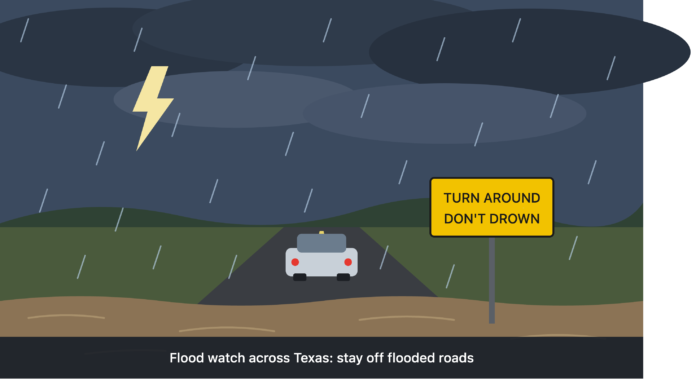
  • Turn around, don’t drown. Never drive through water covering the road, even if it looks shallow or you’ve crossed it before. Forecasters have been repeating this warning all week. mysanantonio
  • Slow down. Hydroplaning can start at surprisingly low speeds when water builds up under your tires. If you start to hydroplane, ease off the gas, keep the wheel straight and don’t slam the brakes.
  • Leave extra space. Double or triple your normal following distance.
  • Use your headlights, not your hazards. In Texas, driving with hazards on in motion can confuse other drivers.
  • Watch for ponding in the left lane and at underpasses. Water collects there first.
  • Pull over safely if visibility drops to near zero. Choose a spot away from creeks, trees and power lines, and wait it out with your lights on.

If your car stalls in rising water

  • Don’t try to restart it.
  • Get out immediately and move to higher ground if you can do so safely.
  • If you’re trapped, call 911.

Know your alerts

  • Flood Watch: Conditions are favorable for flooding. Be prepared and stay aware.
  • Flash Flood Warning: Flooding is happening or about to happen. Move to safety and stay off flooded roads.

Special note: events and crowds

This weekend’s flooding window overlaps with big gatherings. The Austin watch overlaps with the first day of the Austin City Limits Music Festival, one of the city’s largest outdoor events. If you’re headed to an event, expect slow traffic, flooded parking areas and delays. Build in extra time and have a backup plan for getting home. kut

The bottom line

Conditions can change quickly, so check the National Weather Service (weather.gov) or your local station before and during any drive. A delayed trip is an inconvenience. A flooded road can be fatal. Stay safe, Texas.

Disclaimer: This article is provided for general informational and safety awareness purposes only and does not constitute legal advice. Traffic laws, road closures, and emergency orders vary by city, county, and situation, and may change quickly. For questions about your legal rights or responsibilities, such as liability, insurance claims, or traffic violations, consult a licensed attorney. Weather conditions are changing, so always follow guidance from the National Weather Service, local emergency management officials, and law enforcement.

¡RESUELVA SER UN CONDUCTOR SEGURO EN EL NUEVO AÑO!

Conducir en Estados Unidos es una parte integral de la vida diaria de millones de personas. Ya sea que vaya al trabajo, haga recados o se embarque en un viaje por carretera, es crucial priorizar la seguridad al volante. Siguiendo algunos consejos clave para una conducción segura, los conductores pueden contribuir a crear un entorno vial más seguro para ellos y para los demás.

En primer lugar, es esencial que los conductores obedezcan todas las leyes y normas de tránsito. Esto incluye respetar los límites de velocidad, las señales de tráfico, las señales de alto y otras señales de tráfico. Además, mantener una distancia segura con respecto al vehículo que va delante es fundamental, ya que permite un tiempo de reacción adecuado en caso de paradas repentinas o emergencias.

Otro aspecto importante de una conducción segura es evitar distracciones. En la era digital actual, los teléfonos inteligentes y otros dispositivos electrónicos se han vuelto frecuentes en los vehículos. Sin embargo, es imperativo que los conductores se abstengan de utilizar estos dispositivos mientras están al volante. Enviar mensajes de texto, hacer llamadas telefónicas o realizar cualquier otra forma de distracción puede afectar significativamente la capacidad del conductor para reaccionar ante las condiciones cambiantes de la carretera.

Además, el uso del cinturón de seguridad es un aspecto innegociable de una conducción segura. Se ha demostrado que los cinturones de seguridad salvan vidas en caso de una colisión, y es responsabilidad de cada conductor y pasajero abrocharse el cinturón antes de salir a la carretera. Además, los niños deben estar adecuadamente asegurados en asientos de seguridad o asientos elevados apropiados para su edad para garantizar su seguridad. Mantener un vehículo en buenas condiciones de funcionamiento también es fundamental para una conducción segura.

El mantenimiento regular, incluido el control de la presión de los neumáticos, los frenos, las luces y los niveles de líquidos, puede ayudar a prevenir averías y otros problemas mecánicos que podrían provocar accidentes.

En Estados Unidos está estrictamente prohibido conducir bajo los efectos del alcohol o las drogas. Es imperativo que los conductores nunca se pongan al volante en estado de ebriedad y que tengan un conductor designado o utilicen transporte alternativo si planean consumir alcohol.

Las condiciones climáticas pueden ser impredecibles, por lo que es importante que los conductores adapten su conducción al clima actual. Esto incluye reducir la velocidad en caso de lluvia intensa, nieve o niebla y tener cuidado en carreteras heladas o resbaladizas.

Por último, es vital estar atento a otros usuarios de la vía, incluidos peatones, ciclistas y motociclistas. Los conductores siempre deben ser conscientes de su entorno y tener paciencia y cortesía con otras personas que comparten la carretera.

La conducción segura es una responsabilidad compartida que requiere compromiso y vigilancia por parte de todos los conductores. Siguiendo estos consejos de conducción segura, los conductores pueden contribuir a un entorno vial más seguro para ellos, sus pasajeros y otras personas en la carretera. Trabajemos juntos para hacer que nuestras carreteras sean más seguras para todos.

¡Hable primero con Scutt Law, PLLC! Llame al (210) 460-0424

Si ha resultado lesionado como resultado de negligencia, llame a Scutt Law PLLC y obtenga la asistencia de un abogado con experiencia en lesiones.

RESOLVE TO BE A SAFE DRIVER IN THE NEW YEAR!

Safe Driving Tips for the New Year!

Driving in the United States is an integral part of daily life for millions of people. Whether commuting to work, running errands, or embarking on a road trip, it’s crucial to prioritize safety behind the wheel. By following some key safe driving tips, motorists can contribute to a safer road environment for themselves and others.

First and foremost, it’s essential for drivers to obey all traffic laws and regulations. This includes adhering to speed limits, traffic signals, stop signs, and other road signs. Additionally, maintaining a safe following distance from the vehicle in front is crucial, as it allows for adequate reaction time in the event of sudden stops or emergencies.

Another important aspect of safe driving is avoiding distractions. In today’s digital age, smartphones and other electronic devices have become prevalent in vehicles. However, it’s imperative for drivers to refrain from using these devices while behind the wheel. Texting, making phone calls, or engaging in any other form of distraction can significantly impair a driver’s ability to react to changing road conditions.

Furthermore, wearing seat belts is a non-negotiable aspect of safe driving. Seat belts are proven to save lives in the event of a collision, and it’s the responsibility of every driver and passenger to buckle up before hitting the road. Additionally, children should be properly secured in age-appropriate car seats or booster seats to ensure their safety.

Maintaining a vehicle in good working condition is also crucial for safe driving. Regular maintenance, including checking tire pressure, brakes, lights, and fluid levels, can help prevent breakdowns and other mechanical issues that could lead to accidents.

In the United States, driving under the influence of alcohol or drugs is strictly prohibited. It’s imperative for drivers to never get behind the wheel while impaired, and to have a designated driver or utilize alternative transportation if they plan to consume alcohol.

Weather conditions can be unpredictable, so it’s important for drivers to adapt their driving to the current weather. This includes reducing speed in heavy rain, snow, or fog, and being cautious on icy or slippery roads.

Finally, staying aware of other road users, including pedestrians, cyclists, and motorcyclists, is vital. Drivers should always be mindful of their surroundings and exercise patience and courtesy toward others sharing the road.

Safe driving is a shared responsibility that requires commitment and vigilance from all motorists. By following these safe driving tips, drivers can contribute to a safer road environment for themselves, their passengers, and others on the road. Let’s work together to make our roads safer for everyone.

Talk to Scutt Law, PLLC first!  Call (210) 460-0424

If you have been injured as a result of negligence, call Scutt Law PLLC and get the assistance of an experienced injury attorney!

MASS TORT

Understanding Mass Tort: Seeking Justice for Many

In today’s legal landscape, mass tort litigation is becoming increasingly prevalent. While many people have heard the term “mass tort,” they may not fully understand what it entails. Mass tort is significant in seeking justice for a large number of individuals who have been harmed by a common cause.

What is Mass Tort? Mass tort refers to a legal action in which a large number of people who have suffered similar injuries or damages caused by a common product, practice, or event, come together to seek compensation for their losses. Unlike a class-action lawsuit, where plaintiffs are treated as a single entity, mass tort cases involve individual lawsuits that are consolidated for efficiency purposes.

Why Do Mass Torts Occur? Mass torts occur when a defective product, harmful medication, environmental disaster, or other negligent action leads to widespread harm. The injuries suffered by individuals in these cases may range from physical harm to emotional distress, financial losses, or even loss of life. By pooling their resources and sharing the burden of litigation, victims can pursue justice collectively.

The Benefits of Mass Torts:

  1. Strength in Numbers: In mass tort cases, plaintiffs leverage the power of numbers. By joining forces, they can hold large corporations, pharmaceutical companies, or other entities accountable for their actions, ensuring that justice is served.
  2. Efficiency: Consolidating similar cases streamlines the legal process, reducing costs and allowing for more efficient resolution. This approach also enables a more comprehensive examination of evidence, expert testimonies, and other crucial elements of the case.
  3. Fair Compensation: Mass torts ensure that individuals receive fair compensation for their injuries and losses. By combining their claims, plaintiffs can negotiate for higher settlements or awards, as the collective impact of damages is considered.
  4. Public Awareness: Mass torts often generate significant media attention, raising public awareness about the dangers associated with a particular product or practice. This increased awareness can lead to changes in regulations, improved safety measures, and prevention of future harm.

Examples of Mass Torts:

  1. Product Liability: A defective medical device or a dangerous drug that causes significant harm to a large number of users can lead to a mass tort. Examples include faulty hip replacements, harmful prescription drugs, or defective consumer products.
  2. Environmental Disasters: Oil spills, chemical leaks, or other environmental disasters that cause extensive harm to communities can result in mass tort litigation. Victims may seek compensation for property damage, health issues, or loss of livelihood.
  3. Workplace Exposure: Mass torts can arise from exposure to hazardous substances or unsafe working conditions. Examples include asbestos-related diseases, occupational illnesses, or exposure to toxic chemicals.

Mass tort litigation provides a platform for individuals who have suffered similar harm to come together and seek justice. By consolidating their cases, victims can hold accountable those responsible for their injuries or losses. Whether it’s a defective product or an environmental disaster, mass torts play a crucial role in ensuring fair compensation, raising public awareness, and preventing future harm.

Questions About Mass Tort – Call Scutt Law PLLC: (210) 460-0424

If you have been injured as a result of a dangerous drug, a dangerous product, or other potential mass tort, call Scutt Law PLLC and get the assistance of an experienced mass tort attorney!

Halloween y los peligros inquietantes de conducir ebrio

A medida que se acerca la temporada espeluznante de Halloween, es esencial recordar que el verdadero peligro no se encuentra en los fantasmas y los demonios que deambulan por las calles, sino en la combinación potencialmente mortal de alcohol y conducción. La conducción ebrio es una realidad inquietante que puede convertir una noche de diversión inofensiva en una pesadilla. Juntos, exploremos las consecuencias escalofriantes de conducir ebrio en Halloween y la importancia de tomar decisiones responsables para mantenernos a salvo y a los demás.

Las estadísticas aterradoras: las estadísticas que rodean el conducir ebrio en Halloween son la pestaña. Según la Administración Nacional de Seguridad del Tráfico de Carreteras (NHTSA), de 2012 a 2016, el 44% de todas las muertes por tráfico en la noche de Halloween involucraron conductores ebrios. Esta cifra alarmante resalta la necesidad de una mayor conciencia y precaución durante este tiempo festivo.

Las consecuencias aterradoras: la conducción ebrio no solo pone en riesgo la vida del conductor, sino que también pone en peligro la vida de peatones inocentes y otros automovilistas. Imagine el horror de un niño que cruza la calle con su adorable disfraz de Halloween, solo para ser golpeado por un conductor ebrio. Las consecuencias de tal incidente pueden ser devastadoras, dejando a las familias destrozadas y las comunidades traumatizadas.

Trucos para evitar el regalo diabólico de conducir ebrio: a. Planifique con anticipación: si asiste a una fiesta de Halloween, asegúrese de tener un conductor designado o organizar un servicio de viaje compartido. Planificar con anticipación asegura que no se sienta tentado a ponerse al volante después de consumir alcohol. b. Fiestas seguras para anfitriones: si está organizando una reunión de Halloween, proporciona opciones de bebidas no alcohólicas, alienta a los huéspedes a designar a los conductores y tiene información de contacto para los servicios locales de taxi disponibles. C. Sea un espectador responsable: si es testigo de alguien que intenta conducir mientras está intoxicado, no dude en intervenir. Ofrezca llamar a un taxi o proporcionar una alternativa segura para que lleguen a casa.

Difundir la conciencia: use el poder de las redes sociales y su voz para crear conciencia sobre los peligros de conducir ebrio en Halloween. Comparta publicaciones informativas, infografías e historias personales para alentar a otros a tomar decisiones responsables. Al eliminar colectivamente la luz sobre este tema, podemos ayudar a prevenir accidentes trágicos y salvar vidas.

Halloween es un momento para la diversión, la risa y la creación de recuerdos duraderos. Sin embargo, es importante recordar que las elecciones que tomamos pueden tener un impacto escalofriante en nosotros mismos y en quienes nos rodean. Priorizemos la seguridad sobre la embriaguez y nos aseguremos de que este Halloween, no dejemos que los horrores de conducir ebrio arrojen una sombra sobre las festividades. Juntos, podemos hacer de Halloween una celebración verdaderamente spooktacular y segura para todos.

Recuerde, los únicos espíritus que debemos encontrar en Halloween son los amigables, no del tipo intoxicante. ¡Manténgase a salvo, manténgase responsable y pase inquietantemente bien!

Halloween and the Haunting Dangers of Drunk Driving

As the spooky season of Halloween approaches, it’s essential to remember that the real danger lies not in the ghosts and ghouls that roam the streets, but in the potentially deadly combination of alcohol and driving. Drunk driving is a haunting reality that can turn a night of harmless fun into a nightmare. Out of caution, let’s explore the chilling consequences of drunk driving on Halloween and the importance of making responsible choices to keep ourselves and others safe.

Halloween is a time for fun, laughter, and creating lasting memories. However, it’s important to remember that the choices we make can have a chilling impact on ourselves and those around us. Let’s prioritize safety over inebriation and ensure that this Halloween, we don’t let the horrors of drunk driving cast a shadow on the festivities. Together, we can make Halloween a truly spooktacular and safe celebration for everyone.

  1. The Frightening Statistics: The statistics surrounding drunk driving on Halloween are hair-raising. According to the National Highway Traffic Safety Administration (NHTSA), from 2012 to 2016, 44% of all traffic fatalities on Halloween night involved drunk drivers. This alarming figure highlights the need for increased awareness and caution during this festive time.
  2. The Scary Consequences: Drunk driving not only puts the life of the driver at risk but also endangers the lives of innocent pedestrians and other motorists. Imagine the horror of a child crossing the street in their adorable Halloween costume, only to be struck by a drunk driver. The consequences of such an incident can be devastating, leaving families shattered and communities traumatized.
  3. Tricks to Avoid the Devilish Treat of Drunk Driving: a. Plan ahead: If you’re attending a Halloween party, make sure to have a designated driver or arrange for a ride-sharing service. Planning ahead ensures that you won’t be tempted to get behind the wheel after consuming alcohol. b. Host safe parties: If you’re hosting a Halloween gathering, provide non-alcoholic drink options, encourage guests to designate drivers, and have contact information for local cab services readily available. c. Be a responsible bystander: If you witness someone attempting to drive while intoxicated, don’t hesitate to intervene. Offer to call a taxi or provide a safe alternative for them to get home.
  4. Spreading Awareness: Use the power of social media and your voice to raise awareness about the dangers of drunk driving on Halloween. Share informative posts, infographics, and personal stories to encourage others to make responsible choices. By collectively shedding light on this issue, we can help prevent tragic accidents and save lives.

Halloween is a time for fun, laughter, and creating lasting memories. However, it’s important to remember that the choices we make can have a chilling impact on ourselves and those around us. Let’s prioritize safety over inebriation and ensure that this Halloween, we don’t let the horrors of drunk driving cast a shadow on the festivities. Together, we can make Halloween a truly spooktacular and safe celebration for everyone.

Remember, the only spirits we should encounter on Halloween are the friendly ones, not the intoxicating kind. Stay safe, stay responsible, and have a hauntingly good time!

Talk to Scutt Law, PLLC first!  Call (210) 460-0424

If you have been injured as a result of negligence, call Scutt Law PLLC and get the assistance of an experienced injury attorney!

CLICK TO CALL NOW!